
The Plow and Power: An Agricultural Origin of Gender Inequality

How did an agricultural tool shape gender inequality? The plow, by altering labour distribution and land ownership, reinforced male dominance in farming societies. Even today, its legacy persists in labour markets and wage gaps. This article explores the historical roots of gender roles and their lasting impact on economic development.

Anatolia was one of the earliest regions to adopt the plow, today, Turkey is wasting 25% of its potential growth because of the very low participation of women in the labour market (37.6% in 2017, ranking 131st out of 144 countries, Global Gender Gap Report (2017); World Bank (2022)). How comes...?
The historical role of women in economic and political structures cannot be understood without tracing the agricultural foundations of human societies. Over millennia, agricultural tools and techniques shaped social and economic dynamics, profoundly influencing the division of labour between men and women. Among these innovations, the plow played a decisive role. By replacing hoe-based cultivation methods, it fundamentally altered agricultural work organization and, by extension, societal structures.

The Historical Influence of the Plow on Labour Division
In The Conditions of Agricultural Growth (1970), economist and sociologist Esther Boserup identified two major agricultural models: one based on shifting agriculture with light tools like the hoe, and another on intensive plow-based agriculture. Recent empirical studies, such as those by Alesina, Giuliano, and Nunn (2013), further support Boserup’s claims, demonstrating how societies with a history of plow agriculture tend to exhibit more pronounced gender disparities in labour force participation and political representation.
In societies where the hoe was used, women actively participated in farming and often controlled food resources and their distribution. In contrast, the introduction of the plow shifted control toward men. Due to the physical strength required for plowing, men monopolized this task, gradually excluding women from primary agricultural labour and confining them to domestic or secondary roles.
Cultural and Religious Mechanisms at Play
This shift was accompanied by an evolution in religious beliefs:
Mythology and Religion: Mythological narratives were adapted to reflect the new social structure. Male deities gained prominence, symbolizing strength and dominance, while female figures were increasingly associated with fertility and domesticity. These narratives justified and sanctified the gender-based division of labour.
Social Norms: Societies developed cultural expectations regarding appropriate roles for each gender. Men were perceived as providers and protectors, while women were confined to the domestic sphere. These norms were often codified into laws and customs, restricting women’s opportunities in the public and economic spheres.
Intergenerational Transmission: Values and beliefs regarding gender roles were passed down through generations via education, religious practices, and family traditions. This ensured the continuity of established patriarchal structures.
This transformation mirrored and reinforced the emerging male dominance in society. The labour and cultural reorganization was accompanied by changes in land rights and power relations. In many plow-based societies, land ownership was transmitted through male lineage, reinforcing women’s economic exclusion.
Industrialization and the Persistence of Inequality
This agricultural-based labour division persisted into the industrial era. The advent of mechanized production shifted work from homes to factories, predominantly employing men in these new industrial roles. As men became primary wage earners, women’s financial dependence increased, limiting their autonomy and reinforcing traditional gender hierarchies. Women's economic contributions within the household diminished, and their roles became increasingly centered around domestic duties. Literature, media, and educational materials often depicted women as nurturers and homemakers, while men were portrayed as providers and leaders, embedding these roles into societal consciousness.

In that respect, technology can be strongly illusive. The marketing of household appliances such as dishwashers, vacuum cleaners, and even microwaves was often framed as a means to "free" women from household labour. Far from rebalancing domestic tasks, what was pictured as “modernity” confined women behind the stoves. This industrial transition reinforced patriarchal structures, as economic power and public life became male-dominated, while women's work was undervalued and confined to the private sphere. Still today, women continue to perform the majority of domestic tasks, reinforcing their dual burden of professional and household responsibilities (OECD, 2022).
Contemporary Impact on Politics and Economics
The gendered division of labour, shaped by agricultural history, continues to influence modern economies and political structures. While industrialization has shifted employment patterns, remnants of past divisions persist. Countries with deeply ingrained plow-based agricultural traditions often exhibit lower female labour force participation and greater gender wage gaps (Alesina, Giuliano, & Nunn, 2013). Countries such as Italy and Greece maintained gender inequalities in access to resources and economic opportunities. Wage gaps and barriers to female entrepreneurship persist in these countries, limiting their contributions to economic growth. In Italy, women earn on average 16% less than men, and only 22% of businesses are led by women (Eurostat, 2021). In Greece, the female employment rate is 20 percentage points lower than that of men, hindering economic expansion (OECD, 2022). These structural inequalities slow economic development by underutilizing a significant portion of the workforce.
Conversely, Nordic countries such as Sweden and Norway, which historically relied on fishing, livestock farming, and light agricultural tools, exhibit more inclusive family and economic structures. The absence of a rigidly gendered labour division rooted in the plow contributed to greater gender equality. Today, these countries rank among the highest in gender equality and have high female employment rates (OECD, 2022). In Sweden, for example, female employment stands at 77%, significantly above the European average, with public policies supporting work-life balance, reducing wage gaps, and fostering economic growth.
Other regions such as Southeast Asia and West Africa, where agriculture historically relied on the hoe, women maintained a more active economic role, facilitating a more inclusive transition to industrialization and economic growth (FAO, 2011; CIHEAM, 2020). In Rwanda, where traditional agriculture relied on manual tools and women played a crucial role in food production and distribution, female political participation is among the highest in the world. In 2022, women held 61.25% of parliamentary seats (Inter-Parliamentary Union, 2022), contributing to agricultural and economic reforms that promote growth and wealth redistribution.

Economic policies and corporate strategies reflect this secular pattern, either reinforcing or breaking gender labour divisions. Countries that implement policies like subsidized childcare, shared parental leave, and financial incentives for female entrepreneurship show stronger female workforce participation and economic growth. For instance, Iceland's gender-inclusive parental leave policies have significantly reduced the gender wage gap, while countries like Japan, still influenced by historical agricultural gender roles, struggle with low female workforce integration despite economic modernization (OECD, 2022).
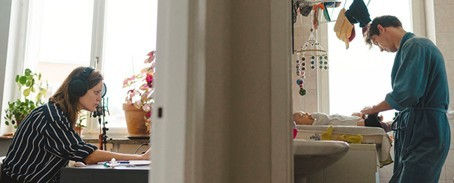
From the Plow to Social Structures: A Long-Lasting Furrow
This "Plow-division” phenomenon illustrates a broader principle: economic and growth models are deeply anchored in historical agricultural and technological choices.
Understanding these historical dynamics not only explains current inequalities but also helps identify levers for more inclusive and sustainable development. For instance, in many countries, customary laws and discriminatory practices prevent women from owning or inheriting land. If women had equal access to agricultural resources as men, they could increase the yield of their farms by 20-30%, reducing global food insecurity by 12-17% (FAO, 2011).
Today, as technological advancements make work accessible to all, economies still lag in recognizing and valuing women’s contributions. History has shown that outdated gender roles do not dissolve on their own; they require conscious effort and policy intervention to be dismantled. As societies evolve and environmental challenges emerge, so must their institutions.
The International Women’s Day is not just celebrating Women or asking for equal pay, it is a civilisational necessity. The world can no longer afford to waste half of its talent. Recognizing, empowering, and supporting women is not only about justice; it is about building a stronger, more inclusive future for all.
References
Eurostat. (2021). Women in Business and Gender Equality Statistics. https://ec.europa.eu/eurostat
Alesina, A., Giuliano, P., & Nunn, N. (2013). On the Origins of Gender Roles: Women and the Plough. The Quarterly Journal of Economics, 128(2), 469-530.
Boserup, E. (1970). The Conditions of Agricultural Growth: The Economics of Agrarian Change under Population Pressure. Aldine Publishing Company.
CIHEAM. (2020). Women’s Leadership in Mediterranean Agriculture.
FAO. (2011). The Role of Women in Agriculture. ESA Working Paper No. 11-02. https://www.fao.org/3/am307e/am307e00.pdf
Inter-Parliamentary Union. (2022). Women in National Parliaments.
European commission (2018). Women on the labour market.
OECD. (2022). Employment Rate by Gender in European Countries.
OECD. (2022). Gender Wage Gap Statistics in Europe.
World Bank. (2016). Rwanda: Poverty Assessment.
World Bank. (2022). Rwanda Economic Update.


Comments